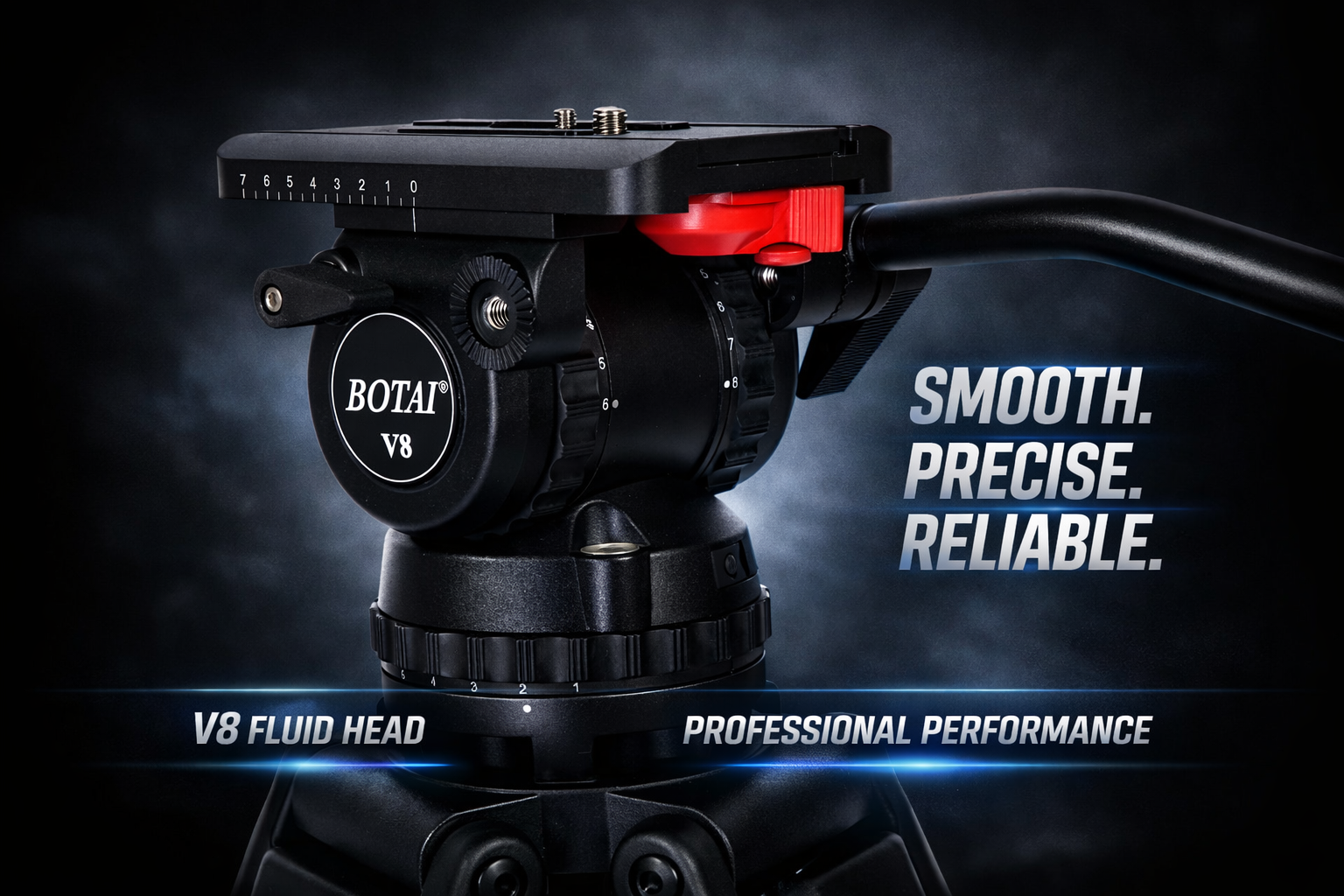
In professional video production, smooth camera movement is never an accident. It depends on the quality of the support system behind the shot, and at the center of that system is the fluid head .
While tripod legs provide the foundation, the head is the component that directly controls pan, tilt, balance, and operating feel. For broadcasters, studio operators, rental houses, and professional videographers, the performance of the tripod head has a direct impact on shot quality, workflow efficiency, and equipment reliability.
A well-designed fluid head helps operators achieve controlled, repeatable movement in a wide range of shooting conditions. Whether the application is news gathering, live production, documentary work, interview shooting, or studio operation, the right head makes camera handling more stable, more accurate, and more professional.
What Is a Fluid Head ?
A fluid head tripod head is a professional camera support head designed to provide smooth pan and tilt movement through a damping mechanism. Compared with simple friction-based heads, fluid heads deliver more controlled resistance, which allows operators to start, follow, and stop camera movement with greater precision.
This matters because even small movement errors can be clearly visible on screen, especially when using longer lenses or shooting in controlled broadcast and studio environments. A good fluid head does not simply hold the camera. It helps the operator move the camera naturally, maintain framing more accurately, and work with greater confidence over long shooting sessions.
Why the Head Matters So Much
In many purchasing decisions, attention is often focused on payload, tripod material, or overall system weight. These factors are important, but the head is the part that determines how the camera actually behaves during operation.
If the head does not provide smooth drag, reliable counterbalance, and secure locking, even a strong set of tripod legs cannot deliver professional performance. This is why experienced buyers pay close attention to the technical quality of the head itself.
For distributors and dealers, this is also a key commercial point. End users judge a tripod system largely by how it feels in real operation. Smooth movement, stable support, and predictable control are what create confidence in the product.
Key Technologies Inside a Fluid Head
Pan and Tilt Drag
One of the most important features of a professional video tripod head is the drag system. Pan and tilt drag control the resistance felt by the operator during movement.
A good drag system should provide smooth startup, even resistance throughout the movement, and clean stopping control. This allows operators to follow subjects more naturally and avoid sudden jerks or inconsistent motion.
In real shooting, poor drag performance quickly becomes noticeable. The camera may feel too loose, too stiff, or uneven during operation. For professional users, especially in broadcast or studio environments, consistent drag is essential for producing clean and polished footage.
Counterbalance System
Counterbalance is another critical part of fluid head design. Its purpose is to support the weight of the camera package across different tilt angles.
In practical applications, the real load is not only the camera body. It often includes the lens, battery, monitor, wireless receiver, matte box, teleprompter, or other accessories. Without proper counterbalance, the camera may tilt forward or backward when the lock is released, making operation more difficult and less safe.
A reliable counterbalance system improves control, reduces operator fatigue, and helps maintain stable framing during tilt adjustments. This is particularly important for heavier camera builds and professional production setups.
Structural Stability and Locking Reliability
Smooth movement is only one part of head performance. A broadcast tripod head must also remain structurally stable under working load and hold position securely when locked.
Strong pan and tilt locks are essential during setup changes, pauses between takes, and fixed framing situations. At the same time, the internal structure of the head should be precise and durable enough to maintain performance over repeated use.
For rental companies and professional users, long-term reliability is not optional. Equipment must continue performing consistently after transportation, frequent handling, and regular field use.
Choosing the Right Fluid Head for Professional Use
Selecting the right fluid head tripod head starts with understanding the actual application.
A head used for ENG shooting may require a different balance of portability and control than one used for studio production or live event coverage. The true working payload should always be calculated based on the complete camera package, not just the camera body alone.
Buyers should also evaluate how the drag and counterbalance work together. A head may have sufficient payload capacity on paper, but if the movement does not feel controlled or the balance is not stable, the practical user experience will still fall short.
Compatibility is another important factor. The head should match the tripod system, bowl size, mounting interface, and intended operating style. For professional buyers, after-sales support, supply consistency, and product reliability are equally important in long-term purchasing decisions.
What Professional Buyers Expect
For distributors, rental houses, and studio buyers, a quality fluid head should deliver more than basic functionality. It should offer dependable operating performance, stable quality from batch to batch, and a design that meets the real demands of professional users.
Professional buyers are not simply sourcing hardware. They are choosing a product that will be judged in daily operation by camera operators, technicians, and production teams. That is why smooth fluid movement, reliable counterbalance support, stable construction, and practical usability remain essential in every professional tripod solution.
Conclusion
The fluid head is one of the most important parts of any professional camera support system. It affects movement quality, camera balance, operator control, and overall shooting efficiency.
For professional applications, the right head is not just about carrying the load. It is about delivering smooth motion, predictable handling, and reliable performance in real working environments.
If you are looking for professional tripod solutions for broadcast, studio, rental, or distribution projects, choosing the right fluid head can help improve operator confidence, shooting quality, and long-term equipment value.